Light therapy lamps have a real winter job in New York, where the December commute runs dark in both directions. The studied protocol is specific. Per National Institute of Mental Health guidance, a 10,000 lux light box is the tested instrument for winter-pattern seasonal affective disorder. The studied dose sits at about 30 to 45 minutes each morning, from fall into spring.
The support is genuine but uneven, because much of the published record sits on weak designs. The meta-analysis below counts that cost with numbers. For the habits that share the dark evenings, the sleep hygiene audit ranks what actually moves sleep. The wellness hub keeps the seasonal file.
What Counts as a Light Therapy Lamp?
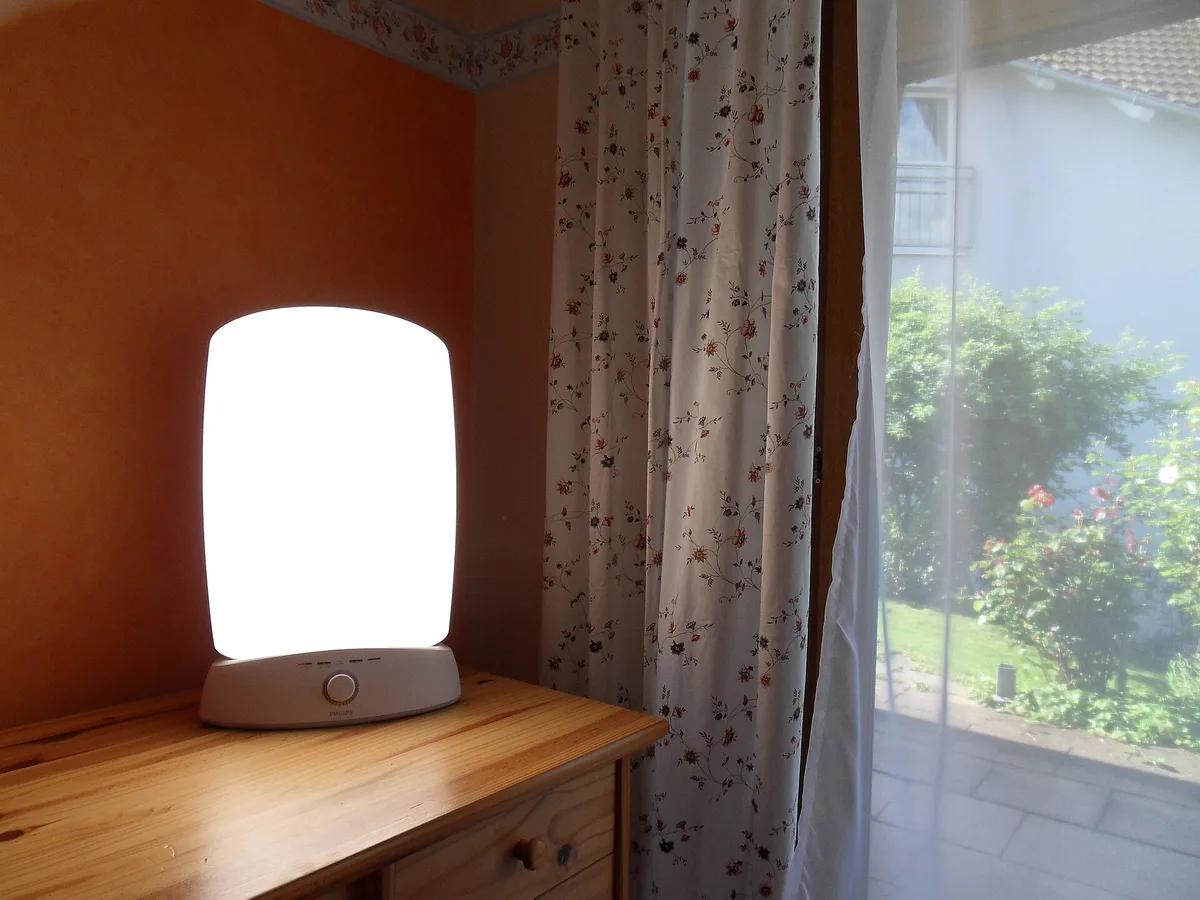
A device built to trial specifications, not a decorative glow. The institute's guidance describes the studied instrument as a very bright light box at 10,000 lux. That is roughly 20 times ordinary indoor light, with damaging ultraviolet wavelengths filtered out. Most light therapy lamps advertise exactly those numbers, while the trials behind them stay narrower than the shelf.
Lux measures illuminance where it reaches the eye, not brightness printed on a box. Distance and angle decide the delivered dose, and the label number assumes a specific seating distance. A lamp parked at the far end of a kitchen counter gives a fraction of its label.
What Did the Trials Find?
Support for winter-pattern SAD, on a paper trail back to 1984. A team at the National Institute of Mental Health described 29 patients with the syndrome in Archives of General Psychiatry. Preliminary work in 11 of those patients found an antidepressant effect. The tool was bright artificial light, extending the winter photoperiod.
The 2005 meta-analysis in the American Journal of Psychiatry put an effect size of 0.84 on bright light across eight randomized studies. Dawn simulation scored 0.73 across five. Robert Golden's team at the University of North Carolina called bright light efficacious for seasonal affective disorder. Only 13 percent of published studies met their inclusion bar.
How Do Timing and Safety Work?
Morning, steady, short. The studied session runs 10,000 lux for about 30 to 45 minutes, usually first thing in the morning. The season stretches from fall into spring, and the box filters its ultraviolet output. Timing is part of the protocol itself, not a preference. This connects to our earlier piece, Morning Light and Your Body Clock: How Many Minutes You Actually Need.
Two safety lines come from the institute's guidance. People with certain eye diseases may need alternative treatments or supervision. The same holds for people taking medications that increase sensitivity to sunlight. Everyone else still gets the ultraviolet filter as standard equipment. For related coverage, see Morning Wellness Routines Worth Stealing From Real People.
Where Does the Evidence Thin Out?
At the edges of the marketing. In the same meta-analysis, bright light added to antidepressant medication showed no benefit for nonseasonal depression. The five studies behind that null landed near zero, while light alone for nonseasonal depression scored 0.53 across three studies. Dawn simulation, the alternative format, rests on fewer trials than the standard boxes.
Consumer claims drift furthest where trials are quietest. Energy upgrades and skin benefits were never tested in the mood literature. A lamp is a tool with one well-studied job, and the labels around it sell work it has not done.
Conclusion: A Protocol With a Paper Trail
The trials back a narrow protocol. A 10,000 lux box with ultraviolet filtered out covers the studied use in winter-pattern seasonal affective disorder. The dose runs 30 to 45 minutes in the early morning, from fall into spring. The 1984 case series opened the file, and the 2005 meta-analysis hardened it into effect sizes.
For New York readers whose lamps surface with the clock change, the record favors matching specs and matching mornings. Everything else printed on the box is marketing until a trial says otherwise.